Look for scope first
A useful estimate describes what work will be done, in which rooms or areas and with what materials. Vague lines like "install flooring" leave room for disagreement later.
If something is not listed, ask whether it is included.
Materials and allowances
Check whether materials are named by brand and grade, or listed as an allowance. An allowance is a placeholder amount. If you choose something more expensive, the total goes up.
Ask what happens to the price if you change your mind.
Timeline, payment and changes
Good estimates note the expected start, duration and payment schedule. They also explain how changes are handled, since small changes tend to appear in every project.
Get any change in writing, with a price, before work continues.
Comparing two estimates
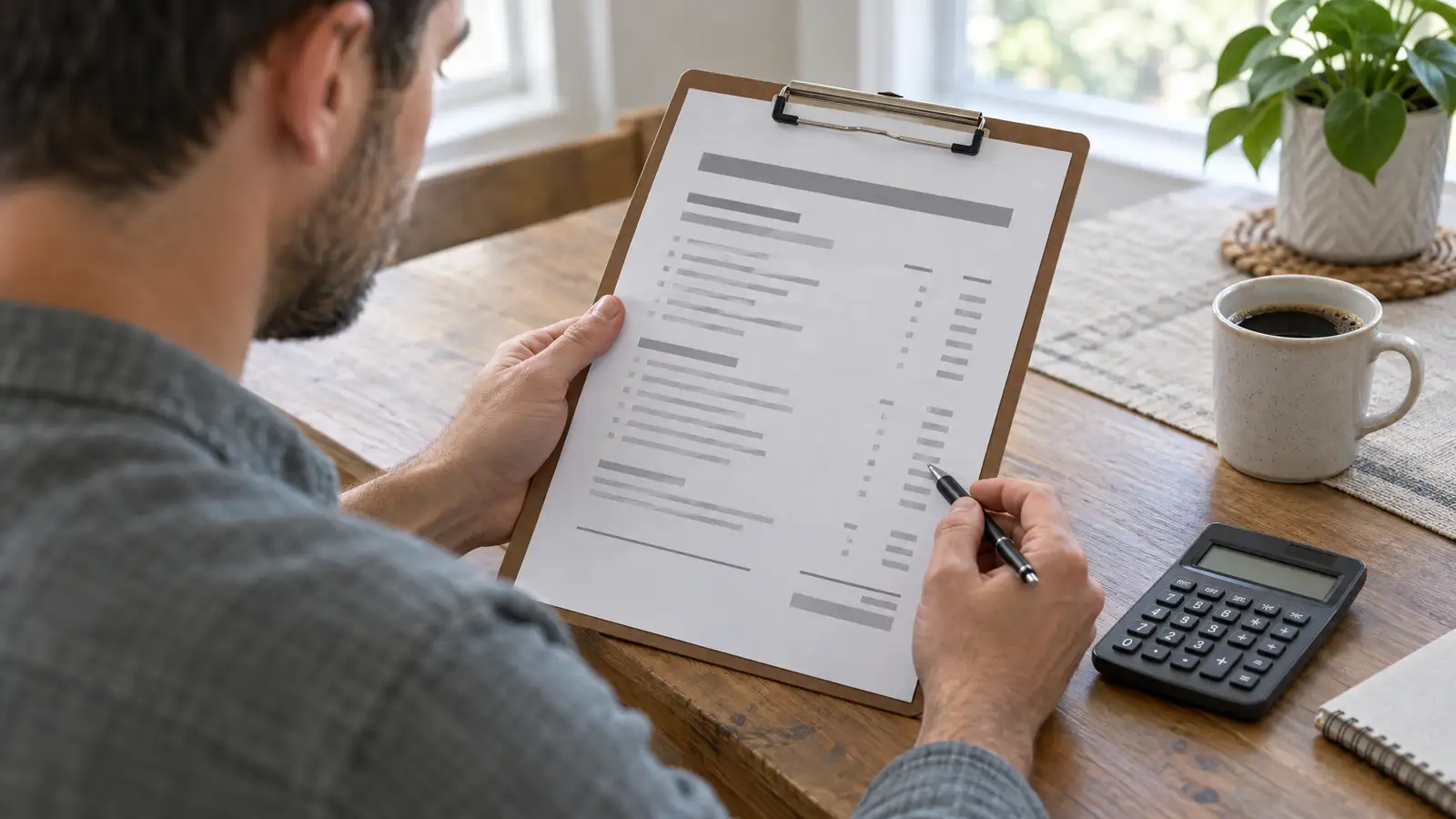
Line them up side by side. A lower number often leaves something out, such as prep, permits, haul-away or cleanup. A higher number may include extras you do not need.
Call each contractor and ask about differences. The answers tell you a lot.